
Factors influencing profitability include initial investment, operation scale, and market conditions. Interior Design Bookkeeping Budgeting for ongoing expenses without immediate returns is critical during the maturation period. Choosing the right location for your winery is crucial for success. Consider factors such as climate, soil quality, accessibility, and proximity to markets. Ideal vineyard locations have good drainage, ample sunlight, and minimal frost risk.
Turn to Protea Financial for Help with Your Wine Accounting Needs
- When calculating labor costs, it can be difficult to pin down the pay of executives and owners to any one specific department, let alone a single vintage.
- Join 500+ wine business owners in the know, getting the latest accounting news in the wine business.
- Combining YoY growth with other metrics can help you assess the overall financial health of your operation.
- Protea Financial is responsive, affordable, and absolutely lovely to work with.
- At Protea Financial, our team of financial experts specialize in supporting wineries like yours with expert bookkeeping and accounting services tailored to the unique needs of the wine industry.
- This is where the expertise of an outsourced bookkeeping service can be invaluable.
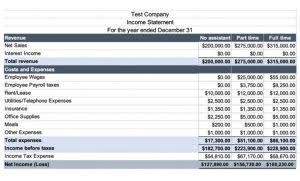
If you own both a winery and a vineyard, the cash method of accounting isn’t enough. In accrual accounting, revenue and expenses income statement are recorded in the books at the time of the transaction. Many wineries use accrual accounting as part of the bookkeeping process, because not all wine sells at the time of bottling. A bookkeeper would record expenditures for wine barrels at the time of the barrel purchase. The wine that goes into that barrel may not be sold for months or years, at which time the bookkeeper records the revenue. Cash accounting is easier than accrual accounting, because expenses and revenues happen in the same growing season.
- Think of this process as building your wine inventory over time.
- Most agricultural bookkeeping—whether with crops and crop rotation, produce, or livestock—is straightforward.
- From our experience, it has been best to deal with this challenge outside of QBO.
- Winemaking costs vary considerably because of the variations in varietal production processes and aging requirements.
- Be sure to also have accounting auto-reminders and pay-to systems.
- If you aren’t sure how to look for a bookkeeper who has winery experience, we can help.
Tips for managing and valuing your inventory

In contrast, management reporting analyzes department performance as well as its relationship to expenditures and returns on investment (ROI). In other words, management reports are the diagnostics on your winery’s financial health. We have already talked about the big advantage of accurately measuring your profitability, as opposed to simply your bank balance.

From reluctant bookkeeper to successful business owners
Don’t let the complexities of accrual accounting become a barrier to understanding your winery’s true financial health and optimizing your cash flow. Contact Protea Financial today to winery bookkeeping explore how our outsourced bookkeeping services can simplify your accounting processes and empower your winery to thrive. They understand the nuances of revenue recognition for different sales channels, the complexities of inventory costing for aging wines, and the proper matching of production expenses with revenue. Tax accounting for wineries involves managing excise taxes, sales taxes, and import/export taxes. Proper tax accounting ensures compliance with local and federal regulations, helps avoid penalties, and can optimize tax liabilities.

Our team has extensive experience in the wine industry and can help you navigate your books, accounting, inventory valuation and more. If you’re looking for an accounting firm who can help you grow and thrive, book a free consultation today to learn about how RHN can support you. Begin by choosing an accounting system that can track inventory and lots.