
Thousands of people have transformed the way they Bookkeeping for Veterinarians plan their business through our ground-breaking financial forecasting software. The terms “financial model” and “financial plan” are frequently used interchangeably, which can lead to confusion. Learn how tools like Brixx help accounting firms work smarter, serve clients better, and stay ahead in a fast-changing industry. Designed to simplify complex forecasting tasks, Brixx allows accountants to create, manage, and consolidate multiple business forecasts in one streamlined platform.
- For instance, including marketing expenses within COGS would understate your gross profit and misrepresent the true cost of producing your goods.
- That is why each account has its own individual ledger account.
- It is called the T-account because bookkeeping entries are shown in a way that resembles the shape of the alphabet T.
- Whether you are an accountant or a decision-maker the language of business finance is rooted in accounting.
- By tracking the right KPIs, you gain a clear view of what’s really…
🎓 Break Into High Finance with the Investment Banking Mastery Program
Since management uses these ledger accounts, journal entries are posted to the ledger accounts regularly. Most t accounts example companies have computerized accounting systems that update ledger accounts as soon as the journal entries are input into the accounting software. Manual accounting systems are usually posted weekly or monthly. Just like journalizing, posting entries is done throughout each accounting period. The purpose of journalizing is to record the change in the accounting equation caused by a business event.

Eight Mistakes That Could be Slowing Down Your Revenue Planning
You will notice that the transactionsfrom January 3 and January 9 are listed already in this T-account.The next transaction figure of $300 is added on the creditside. Single entry systems cannot use T-accounts because they do not track the changes in account balances. In a single entry system, each transaction is recorded as a debit or credit to one account. There is no way to track the change in balance over time for a particular account. Many companies have nowadays automated this process through the use of an accounting software. Once journal entries are made, they are automatically posted into respective ledger accounts.
- A T-account, an informal term for a set of financial records using double-entry bookkeeping, gets its name from its distinctive appearance.
- No, the debit side of an asset account represents an increase, while the credit side indicates a decrease.
- A T-account is used to track specific transactions, while the balance sheet is a summary of a company’s overall financial position.
- A T account, on the other hand, is a simplified representation of a single account within that ledger (e.g., accounts payable).
- HubiFi’s article on choosing the right inventory valuation method emphasizes the value of expert consultation in navigating the financial landscape.
Setting Up Your COGS T Account
Debits are recorded on the left side of the T, and credits are recorded on the right side. The debits go on the left side of the T, and the credits go on the right side of the T. The difference of these accounts is then carried to the unadjusted trial balance in the next step.
Did you try posting these journals into your own Bank T-account? The above transaction would not only affect the Bank T account but also affect the contra account or second account, Capital. As a general rule, we use the opposite or contra account to describe the transaction. Remember, to debit means to make an entry on the left-hand side. And a simpler definition is probably more appropriate now too.
data-r2-enabled=”true”
The chart below shows the complete set of T-accounts for the example transactions discussed in this article. This transaction is telling us that what we have “on hand” in our supply closet is $1,250 worth of supplies. In the Cash T-Account, the $7,300 payment of cash goes on the right (credit) side of the account because Cash is decreasing. In the Cash T-Account, the $3,180 payment of cash goes on the right (credit) side of the account because Cash is decreasing. In the Accounts Receivable T-Account, the $30,800 record of what is due to the company goes on the left (debit) side of the account because Accounts Receivable is increasing. In the Accounts Payable T-Account, the $2,290 payment goes on the left (debit) side of the account because the liability is decreasing.

Problems With T-Accounts Recording
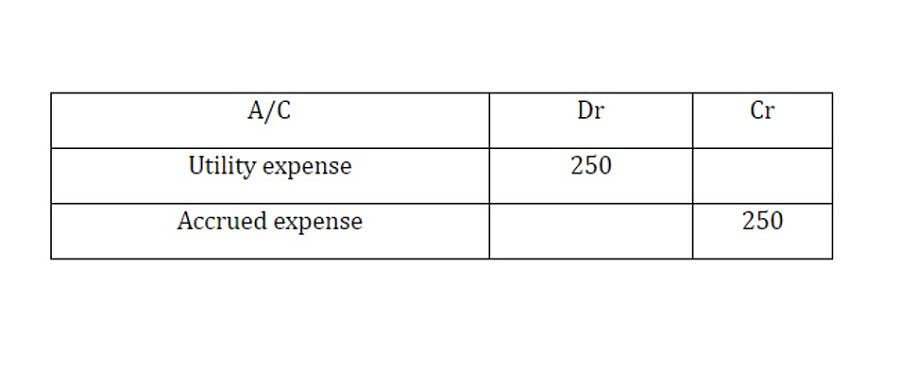
If the textbook net sales says “on account”, it means that cash will go out later. When cash will be paid later the account we use to track what the business will be paying later for payroll is Salaries or Wages Payable. When cash will be paid later the account we use to track what the business will be paying later is Accounts Payable. Here’s a simple example of how a T-account records transactions.